


Science. Clearly.
What’s Sciencerely?
Sciencerely is an award-winning science communication brand dedicated to making cutting-edge biomedical research accessible, understandable, and trustworthy.
Through YouTube, seminars, and public speaking, Sciencerely bridges the gap between laboratory science and society - helping people not only follow scientific progress, but understand its impact. The mission is simple: advance public trust in science while making innovation accessible and meaningful.
Selected Works
Who’s behind Scienerely?
Dr. Clemens Steinek, a cancer researcher and science communicator. He is a project leader at the Max Planck Institute of Biochemistry, where he works at the forefront of nanoscale oncology focused on next-generation precision therapies.
Driven by curiosity and a passion for clear storytelling, Clemens created Sciencerely to bridge the gap between cutting-edge research and the wider public. Through educational videos, visual explanations, and behind-the-scenes insights from the lab, Sciencerely makes complex biomedical science accessible, engaging, and trustworthy — bringing discoveries into focus, one breakthrough at a time.
Scientific Focus
My research focuses on decoding abnormal protein patterns in cancer cells to uncover new therapeutic vulnerabilities. Using advanced super-resolution imaging technologies, I map protein interactions at the nanoscale to better understand how tumors grow, adapt, and resist treatment. The goal is to translate these molecular insights into more precise, durable, and personalized cancer therapies.
Overview of my Research
Selected Highlights
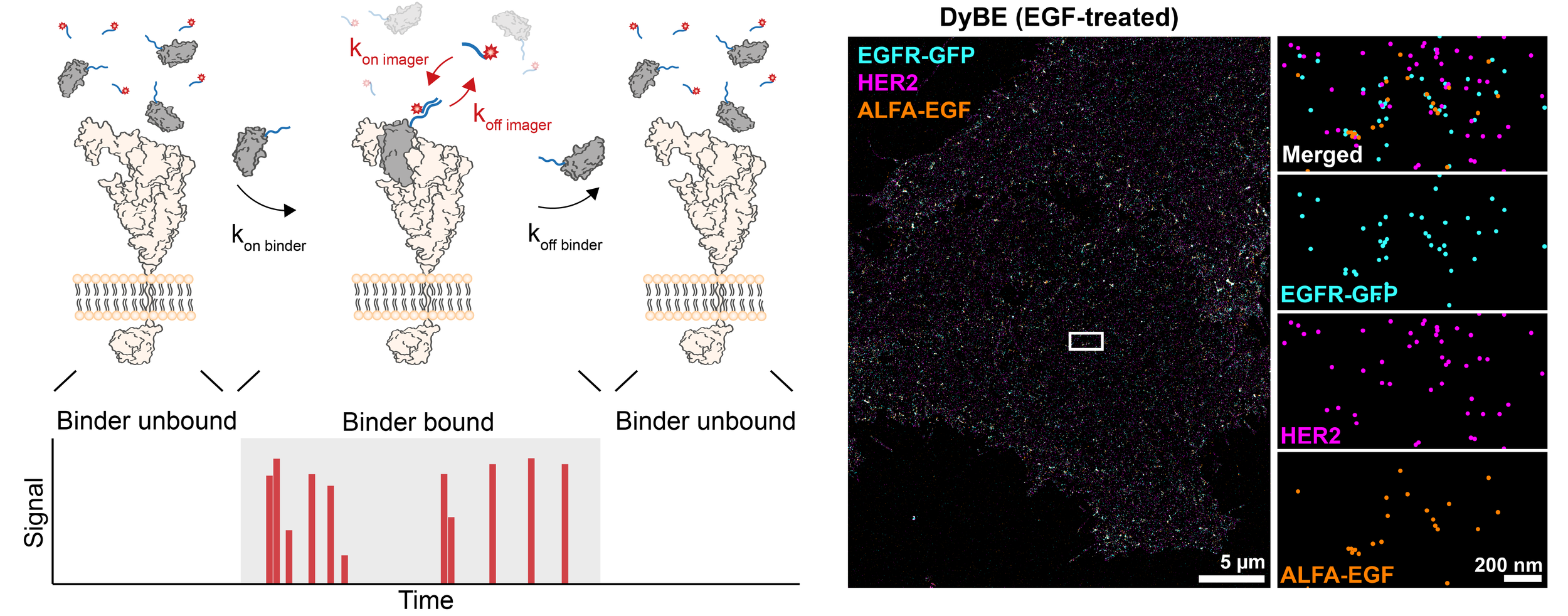
Steinek et al. 2026. Dynamic Binder Exchange (DyBE) enhances DNA-PAINT by harnessing transient, high–off-rate binders as both targeting and docking elements, improving labeling efficiency by up to 15-fold. This technology enables new possibilities for studying receptor organization and advancing precision cancer therapies.
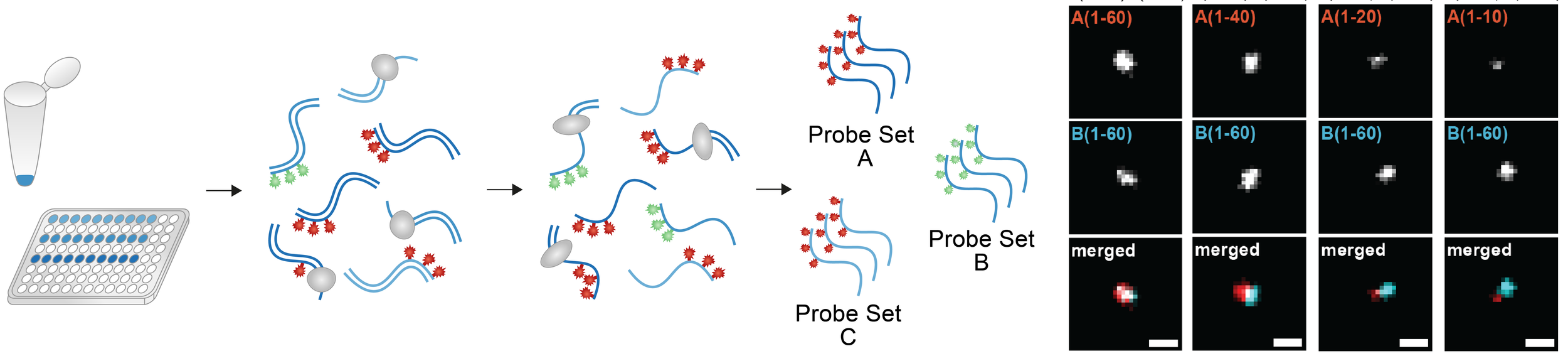
Steinek et al. 2024. We have developed a simple and flexible approach to generate brightly labeled FISH probes, enabling high-resolution visualization of small genomic loci involved in cancer. This method reliably detects targets below the kilobase level, allowing precise analysis of abnormal gene regulation in cancer.
Awards
Young Scientist Award awarded by FastForwardScience and the German Future Prize and the German Federal President’s Award for Technology and Innovation, 2024
Finalist in the LifeScienceXplained competition by Sartorius AG, 2024
Young Scientist Award awarded by FastForwardScience and the German Future Prize and the German Federal President’s Award for Technology and Innovation, 2023
ScienceFluencer Award awarded by the German Society for Biochemistry and Molecular Biology, 2022
Member of the International Max Planck Research School for Molecular Life Sciences, 2020
Deutschlandstipendium awarded by the LMU Munich and Amgen GmbH, 2019
Member of the Elite Network of Bavaria, 2018
Contact us!
